

Report on the Cross-Border Forum on Ending FGM/C and Gender-Based Violence
Between The Gambia, Senegal, and Guinea-Bissau
Jarra Soma, Lower River Region | 17–19 September 2025
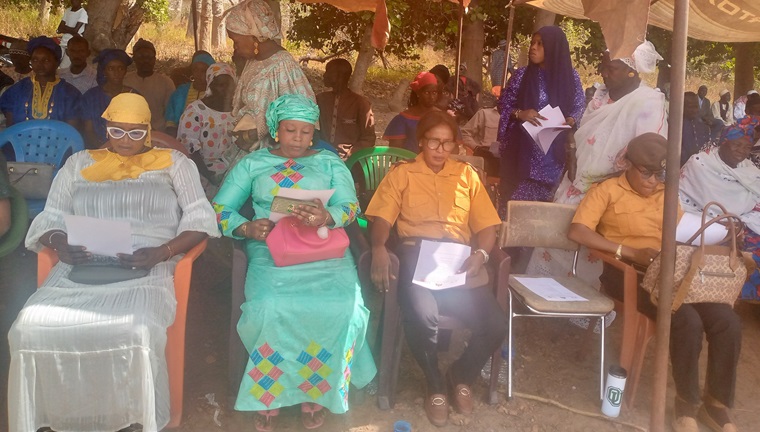
The Ministry of Gender, Children, and Social Welfare, in collaboration with partners from Senegal and Guinea-Bissau, organized a Cross-Border Forum held from
17–19 September 2025 in Jarra Soma, Lower River Region.

The forum brought together government representatives, governors, religious and traditional leaders, civil society, youth groups, and development partners including
UNFPA, ChildFund, and Tostan, to address the persistent challenge of
Female Genital Mutilation/Cutting (FGM/C) and other forms of
Gender-Based Violence (GBV) across the region.
In her opening remarks, the Honourable Minister of Gender, Children and Social Welfare emphasized the urgency of collective action:
“This forum is not simply a meeting, it is a movement. A regional response to a regional problem. FGM/C and gender-based violence do not stop at the border — and therefore, our response must also transcend those same boundaries.”
Key highlights included:
- FGM/C undermines the health, dignity, and rights of women and girls.
- Despite laws, cross-border practices allow communities to evade enforcement.
- A harmonized regional approach is critical.
- Survivors need not only laws but also psychosocial, medical, and legal support.
- Religious and traditional leaders are central to reshaping community attitudes.
- Youth engagement must be prioritized as drivers of change.
Regional Progress and Challenges
The Gambia
- Criminalization of FGM/C under the Women’s (Amendment) Act 2015.
- Community declarations to abandon the practice are increasing.
- Challenges persist in enforcement, reporting, and survivor support.
Senegal
- Over 7,000 communities have publicly declared abandonment of FGM/C.
- Community-led approaches by Tostan are a regional model.
- Need for sustained investment and strong political will.
Guinea-Bissau
- Cultural and linguistic diversity requires tailored communication strategies.
- Local leaders engaged, with messages translated into multiple dialects.
- Strong collaboration between government and civil society continues.
Shared Challenges
- Limited data systems to track prevalence and patterns.
- Cultural and religious misconceptions.
- Inconsistent enforcement of laws across borders.
- Inadequate survivor services, especially in rural areas.
- Low engagement of young people.
Observations and Outcomes of the Forum
- Agreement on the need for cross-border strategies to close enforcement gaps.
- Commitment to harmonize messaging and policies across countries.
- Recognition of the importance of community-led and culturally sensitive approaches.
- Call for investment in training health workers, educators, and law enforcement officers.
- Renewed pledge to align efforts with international human rights standards including CEDAW, CRC, the Maputo Protocol, and SDG 5.
Conclusion and Way Forward
The forum concluded with a unified commitment by The Gambia, Senegal, and Guinea-Bissau to strengthen collaboration in ending FGM/C and GBV.
“Let us leave this forum not just with resolutions, but with responsibility. Not just with plans, but with purpose. Let us cross every border — physical, cultural, or ideological — to protect every girl.”
The Ministry of Gender, Children, and Social Welfare, under the leadership of
H.E. President Adama Barrow, reaffirmed its commitment to working with regional and international partners to ensure that every girl grows up safe, empowered, and free.